Refine search
No keyword found to refine search
keywords EN
Places
Names
|
 Dirty gold from Peru
90 documents found
| 1 | 2 |
Documents per page :
Dirty gold from Peru
Olivier Donnars / Le Pictorium
LePictorium_0234958.jpg
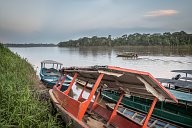
While the Peruvian government and local authorities welcome the Mercurio 2019 operation, which has led to the expansion of illegal mining in La Pampa, many believe that the problem is not solved. After the Mercurio operation, where did most of the hunted miners go? Without economic alternatives or the means to develop a legal and more environmentally friendly mining activity, the risk of a new Pampa cannot be ruled out. Not to mention the fact that the Peruvian government has not yet taken much action against the big illegal gold barons.

Dirty gold from Peru
Olivier Donnars / Le Pictorium
LePictorium_0234957.jpg
The lawyer and professor of law at the Catholic University of Lima, Diego Alonso Collantes Añano. He became a specialist in the Peruvian dirty gold business after he was the lawyer for the American multinational NTR Metals of the Texas group Elemetal LLC and discovered that this company is in fact linked to Peruvian laundering companies that resell dirty gold.

Dirty gold from Peru
Olivier Donnars / Le Pictorium
LePictorium_0234956.jpg
The lawyer and professor of law at the Catholic University of Lima, Diego Alonso Collantes Añano. He became a specialist in the Peruvian dirty gold business after he was the lawyer for the American multinational NTR Metals of the Texas group Elemetal LLC and discovered that this company is in fact linked to Peruvian laundering companies that resell dirty gold.
Dirty gold from Peru
Olivier Donnars / Le Pictorium
LePictorium_0234955.jpg
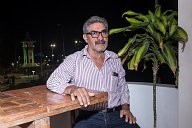
Some miners like Pedro Ynfantes, working in Laberinto, are legally exploited and are trying to change their practices. Three years ago, he decided to do without mercury to amalgamate his gold using a vibrating table that gravimetrically extracts gold dust from the ore. This delicate handling requires specific training and expensive equipment. Unfortunately, he finds it difficult to sell his gold flakes to buyers, who are more accustomed to mercury amalgams.
Dirty gold from Peru
Olivier Donnars / Le Pictorium
LePictorium_0234954.jpg
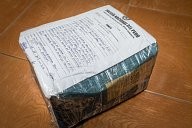
In the premises of the Attorney General of Puerto Maldonado, a package containing 30 kilos of mercury seized from illegal mines by the Marines and the police. The package will be stored as evidence in a reserve, without the authorities knowing what to do with it afterwards.
Dirty gold from Peru
Olivier Donnars / Le Pictorium
LePictorium_0234953.jpg
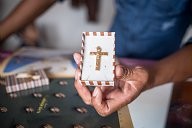
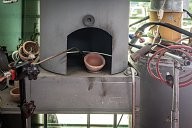
On the outskirts of the market of Puerto Maldonado, an artisan jeweler shows an 18 carat gold cross. Officially, the Compro Oro, the gold buying stores, where the amalgam of gold and mercury is heated, have disappeared. But in backyards, high levels of mercury are sometimes measured in the air from underground stores.
Dirty gold from Peru
Olivier Donnars / Le Pictorium
LePictorium_0234952.jpg
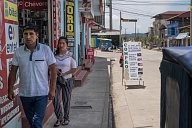
In Mazuco, in a compro oro, there is a gold buying store, a furnace and equipment to heat the amalgam of gold and mercury to recover only the precious ore. Mercury vapors are directly released into the air and have toxic effects on the nervous, digestive and immune systems, as well as on the lungs, kidneys, skin and eyes.
Dirty gold from Peru
Olivier Donnars / Le Pictorium
LePictorium_0234951.jpg
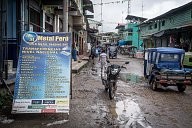
In the city of Mazuco, there is a Compro Oro, a store where gold is bought and sold. where the amalgam of gold and mercury is heated. The amalgam of mercury and gold is heated to recover only the precious ore. Mercury vapours are directly released into the air and have toxic effects on the nervous, digestive and immune systems, as well as on the lungs, kidneys, skin and eyes.
Dirty gold from Peru
Olivier Donnars / Le Pictorium
LePictorium_0234950.jpg
In the village of Laberinto, located 1 hour drive from Puerto Maldonado, the activity is centered around gold panning and gold buying. The miners sell their gold in the Compro Oro where the amalgam of mercury and gold is heated to recover only the precious ore. Mercury vapours are released directly into the air and have toxic effects on the nervous, digestive and immune systems, as well as on the lungs, kidneys, skin and eyes.
Dirty gold from Peru
Olivier Donnars / Le Pictorium
LePictorium_0234949.jpg
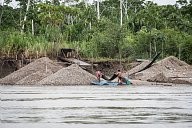
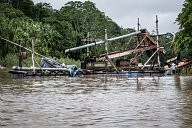
About fifty kilometers from La Pampa, on the banks of the Madre de Dios River, on the outskirts of the village of Laberinto, two miners wash the carpet on which they have collected the gold dust. On the banks of the river, the miners' barges are legion. The river gold panning is however completely prohibited in Peru. Mercury is mainly discharged into the rivers, poisoning fish and contaminating the sediments.
Dirty gold from Peru
Olivier Donnars / Le Pictorium
LePictorium_0234948.jpg
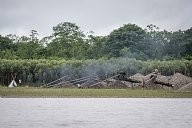
About fifty kilometers from La Pampa, on the banks of the Madre de Dios River, on the outskirts of the village of Laberinto, the miners' barges are legion. The river gold panning is however completely prohibited in Peru. Mercury is mainly discharged into the rivers, poisoning fish and contaminating the sediments.
Dirty gold from Peru
Olivier Donnars / Le Pictorium
LePictorium_0234947.jpg
About fifty kilometers from La Pampa, on the banks of the Madre de Dios River, on the outskirts of the village of Laberinto, the miners' barges are legion. The river gold panning is however completely prohibited in Peru. Mercury is mainly discharged into the rivers, poisoning fish and contaminating the sediments.
Dirty gold from Peru
Olivier Donnars / Le Pictorium
LePictorium_0234946.jpg
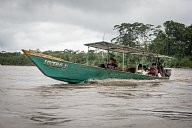
About fifty kilometers from La Pampa, on the banks of the Madre de Dios River, a boat shuttles between the village of Laberinto and the numerous miners' barges. The river gold panning is however totally forbidden in Peru. Mercury is mainly discharged in the rivers, poisoning fish and contaminating the sediments.
Dirty gold from Peru
Olivier Donnars / Le Pictorium
LePictorium_0234945.jpg
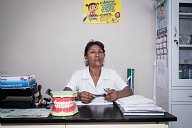
Carmen Rosa, dentist and head of the Alto Libertad health post on the inter-oceanic route, one of the few health posts in the La Pampa region. She is aware of the risks related to mercury but has never received any prevention campaign from the health authorities. However, many studies, especially American ones, show a relatively high level of mercury linked to living near the mines. Children in particular, for whom mercury exposure associated with malnutrition decreases their immune response to six vaccines. In 2016, following several studies showing that 46% of the population of Madre De Dios was contaminated with mercury, the government declared a state of emergency. Despite the government's promises, no means have been released at the local level to monitor the level of contamination of the people.

Dirty gold from Peru
Olivier Donnars / Le Pictorium
LePictorium_0234944.jpg
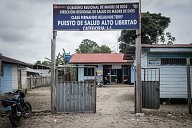
On the Trans-American Highway, linking the east coast of Brazil to the Pacific Ocean, the Alto Libertad health post is one of the few health posts in the La Pampa region. Many pregnant women and children are received there primarily for the dengue fever that strikes the region. Mercury contamination is only secondary and doctors have very little information about the risks. However, many studies, especially American, show a relatively high level of mercury, linked to the fact of living near the mines. Children in particular, for whom mercury exposure associated with malnutrition decreases their immune response to six vaccines. In 2016, following several studies showing that 46% of the population of Madre De Dios was contaminated with mercury, the government declared a state of emergency. Despite the government's promises, no means have been released at the local level to monitor the level of contamination of the people.
Dirty gold from Peru
Olivier Donnars / Le Pictorium
LePictorium_0234943.jpg
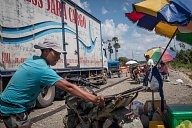
On the Trans-American Highway, linking the east coast of Brazil to the Pacific Ocean, the Alto Libertad health post is one of the few health posts in the La Pampa region. Many pregnant women and children are received there primarily for the dengue fever that strikes the region. Mercury contamination is only secondary and doctors have very little information about the risks. However, many studies, especially American, show a relatively high level of mercury, linked to the fact of living near the mines. Children in particular, for whom mercury exposure associated with malnutrition decreases their immune response to six vaccines. In 2016, following several studies showing that 46% of the population of Madre De Dios was contaminated with mercury, the government declared a state of emergency. Despite the government's promises, no means have been released at the local level to monitor the level of contamination of the people.
Dirty gold from Peru
Olivier Donnars / Le Pictorium
LePictorium_0234942.jpg
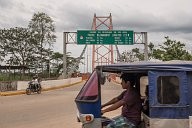
On the outskirts of La Pampa, the inter-oceanic route, linking the east coast of Brazil to the Pacific Ocean, built with great bribes affected by the various governments that have succeeded one another. Supposed to bring economic prosperity, it was named the road of despair. International road traffic there is quite low and contributes to the expansion of illegal mining activity in other parts of the Peruvian Amazon. Smuggled mercury circulates in abundance from Bolivia where its sale is not controlled, gold takes the opposite route.
Dirty gold from Peru
Olivier Donnars / Le Pictorium
LePictorium_0234941.jpg
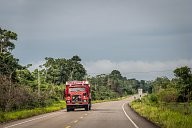
In the city of Puerto Maldonado, the inter-oceanic road, linking the east coast of Brazil to the Pacific Ocean, built with great bribes affected by the various governments that have succeeded one another. Supposed to bring economic prosperity, it was named the road of despair. International road traffic there is quite low and contributes to the expansion of illegal mining activity in other parts of the Peruvian Amazon. Smuggled mercury circulates in abundance from Bolivia where its sale is not controlled, gold takes the opposite route.
Dirty gold from Peru
Olivier Donnars / Le Pictorium
LePictorium_0234940.jpg
On the outskirts of La Pampa, the inter-oceanic route, linking the east coast of Brazil to the Pacific Ocean, built with great bribes affected by the various governments that have succeeded one another. Supposed to bring economic prosperity, it was named the road of despair. International road traffic is quite low and contributes to the expansion of illegal mining activity in other parts of the Peruvian Amazon. Smuggled mercury circulates in abundance from Bolivia where its sale is not controlled, gold takes the opposite route.
Dirty gold from Peru
Olivier Donnars / Le Pictorium
LePictorium_0234939.jpg
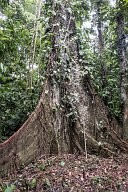
Tropical vegetation in the Tambopata National Reserve, one of the richest in the world in biodiversity. It is home to no less than 1847 species of plants, 755 species of birds and 259 species of fish.
Dirty gold from Peru
Olivier Donnars / Le Pictorium
LePictorium_0234938.jpg
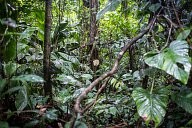
Tropical vegetation in the Tambopata National Reserve, one of the richest in the world in biodiversity. It is home to no less than 1847 species of plants, 755 species of birds and 259 species of fish.
Dirty gold from Peru
Olivier Donnars / Le Pictorium
LePictorium_0234937.jpg
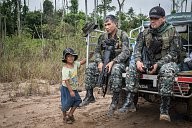
The Marines encourage these former miners to reconvert because they know that for these communities, manipulated by local "barons" who exploit the miners, working in the mine was only a subsistence activity. So it is better to offer them other economic alternatives.
Dirty gold from Peru
Olivier Donnars / Le Pictorium
LePictorium_0234936.jpg
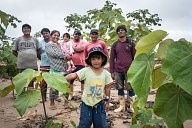
In the reforestation zone of the Tambopata reserve, a family of former miners. Some of them would like to participate in the reforestation.

Dirty gold from Peru
Olivier Donnars / Le Pictorium
LePictorium_0234935.jpg
In the reforestation zone of the Tambopata reserve, a family of former miners. Some of them would like to participate in the reforestation. "The forest is a common good of humanity! says José C. with conviction. Before I was a gold digger, today I'm improving the tracks. And tomorrow, I want to restore! »
Dirty gold from Peru
Olivier Donnars / Le Pictorium
LePictorium_0234934.jpg
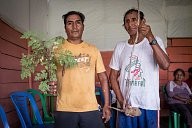
Two inhabitants of "point A8", a village where about fifty families of miners or ex-miners from La Pampa live, present a moringa plant (moringa oleifera) that they would like to cultivate. This tree from tropical countries is often praised for its nutritional and medicinal virtues. Most of the inhabitants would like to participate in the reforestation of the Tambopata reserve or diversify their agriculture.
Dirty gold from Peru
Olivier Donnars / Le Pictorium
LePictorium_0234933.jpg
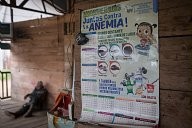
In the community from point A8 in the center of La Pampa where there is no health center, the main health problems are the risks related to anemia. Mercury is not a problem and the community, despite being in contact with this slow poison, has never received any prevention campaign from the government.
Dirty gold from Peru
Olivier Donnars / Le Pictorium
LePictorium_0234932.jpg
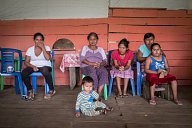
For the inhabitants of Point A8, often from poor regions of the Andes where livelihood prospects are even poorer, the mercury that has ravaged their environment is not a health problem. One of them even claims that his son drank mercury when he was 4 years old without any effect. Most of them would like to participate in the reforestation of the Tambopata reserve or to diversify their agriculture.
Dirty gold from Peru
Olivier Donnars / Le Pictorium
LePictorium_0234931.jpg
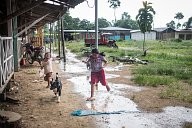
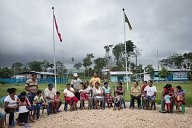
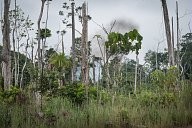
A few kilometers from the destroyed farm, the inhabitants of a village called "A8", one of the last communities of La Pampa, welcomed the military with kindness. About fifty families of miners or former miners, often from the poor regions of the Andes, where prospects for subsistence are even slimmer.
Dirty gold from Peru
Olivier Donnars / Le Pictorium
LePictorium_0234930.jpg
A few kilometers from the destroyed farm, the inhabitants of a village called "A8", one of the last communities of La Pampa, welcomed the military with kindness. About fifty families of miners or former miners, often from the poor regions of the Andes, where prospects for subsistence are even slimmer.
Dirty gold from Peru
Olivier Donnars / Le Pictorium
LePictorium_0234929.jpg
The barge and all its equipment are destroyed with explosives to prevent the miners from resuming their activity. The marines are not intended to arrest the miners. Their mission is only to flush out illegal operations and destroy them.

Dirty gold from Peru
Olivier Donnars / Le Pictorium
LePictorium_0234928.jpg
An illegal gold drilling barge discovered by marines in La Pampa. All the material left by the miners is buried in the water. Lieutenant Fernandez throws in ropes and a lifting pulley that could be used by the miners to pull up their pump motor, which they had buried in the water before they escaped.

Dirty gold from Peru
Olivier Donnars / Le Pictorium
LePictorium_0234927.jpg
The Marines discovered this barge with miners working on it just before their arrival. A marine probed the water to look for the pump that the miners had buried in the water before they escaped. The ore, pumped from the bottom of the excavation, is washed and sieved on a mat to concentrate the gold. before being plunged into large drums containing liquid mercury that amalgamates the gold flakes. A large quantity of mercury - between 3 to 50g of mercury to obtain 1g of gold - is needed. Most of it is then disposed of in the excavation with the other mining waste. The water takes on a "chocolate" color, a sign of high mercury concentration.

Dirty gold from Peru
Olivier Donnars / Le Pictorium
LePictorium_0234926.jpg
The Marines discovered this barge with miners working on it just before their arrival. The ore, pumped from the bottom of the excavation, is washed and sieved on a mat to concentrate the gold. before being plunged into large drums containing liquid mercury that amalgamates the gold flakes. A large quantity of mercury - between 3 to 50g of mercury to obtain 1g of gold - is needed. Most of it is then disposed of in the excavation with the other mining waste. The water takes on a "chocolate" color, a sign of high mercury concentration.

Dirty gold from Peru
Olivier Donnars / Le Pictorium
LePictorium_0234925.jpg
The illegal miners fled as the Marines approached, leaving all their belongings behind. Most of the time, the miners flee, not without first hiding the motor of their pump at the bottom of the water, which they hope to recover once the military has left.

Dirty gold from Peru
Olivier Donnars / Le Pictorium
LePictorium_0234924.jpg
The illegal miners fled as the Marines approached, leaving all their belongings behind. They always have new motorcycle chains with them to make sure they can escape quickly in case of a marine patrol.

Dirty gold from Peru
Olivier Donnars / Le Pictorium
LePictorium_0234923.jpg
The Marines discovered this barge with miners working on it just before the arrival of the military. The ore, pumped from the bottom of the excavation, is washed and sieved on a mat to concentrate the gold. before being plunged into large drums containing liquid mercury that amalgamates the gold flakes. A large quantity of mercury - between 3 to 50g of mercury to obtain 1g of gold - is needed. Most of it is then disposed of in the excavation with the other mining waste. The water takes on a "chocolate" color, a sign of high mercury concentration.

Dirty gold from Peru
Olivier Donnars / Le Pictorium
LePictorium_0234922.jpg
The military heard illegal miners fleeing on motorcycles. They are securing the area in case the minors return with weapons. However, most of the time, the miners flee, not without first hiding the motor of their pump at the bottom of the water, which they hope to retrieve once the soldiers have left. The soldiers are not supposed to arrest the miners. Their mission is to flush out the illegal operations and destroy the installation with explosives.

Dirty gold from Peru
Olivier Donnars / Le Pictorium
LePictorium_0234921.jpg
The military heard illegal miners fleeing on motorcycles. They are securing the area in case the minors return with weapons. However, most of the time, the miners flee, not without first hiding the motor of their pump at the bottom of the water, which they hope to retrieve once the soldiers have left. The soldiers are not supposed to arrest the miners. Their mission is to flush out the illegal operations and destroy the installation with explosives.

Dirty gold from Peru
Olivier Donnars / Le Pictorium
LePictorium_0234920.jpg
Departure on a reconnaissance mission at 3am on foot and partly by van (here in the distance). Illegal miners work a lot at night, taking advantage of the darkness to go unnoticed. Marines leave on patrol in the middle of the night to flush out miners at an operation they believe they spotted a few days earlier. To locate them, the military sometimes use drones, spotting fresh motorcycle tracks or the sound of pumps used by the miners.

Dirty gold from Peru
Olivier Donnars / Le Pictorium
LePictorium_0234919.jpg
Departure on a reconnaissance mission at 3am on foot and partly by van (here in the distance). Illegal miners work a lot at night, taking advantage of the darkness to go unnoticed. Marines leave on patrol in the middle of the night to flush out miners at an operation they believe they spotted a few days earlier. To locate them, the military sometimes use drones, spotting fresh motorcycle tracks or the sound of pumps used by the miners.

Dirty gold from Peru
Olivier Donnars / Le Pictorium
LePictorium_0234918.jpg
Departure on a reconnaissance mission at 3am on foot and partly by van (here in the distance). Illegal miners work a lot at night, taking advantage of the darkness to go unnoticed. Marines leave on patrol in the middle of the night to flush out miners at an operation they believe they spotted a few days earlier. To locate them, the military sometimes use drones, spotting fresh motorcycle tracks or the sound of pumps used by the miners.

Dirty gold from Peru
Olivier Donnars / Le Pictorium
LePictorium_0234917.jpg
Departure on a reconnaissance mission at 3am on foot and partly by van (here in the distance). Illegal miners work a lot at night, taking advantage of the darkness to go unnoticed. Marines leave on patrol in the middle of the night to flush out miners at an operation they believe they spotted a few days earlier. To locate them, the military sometimes use drones, spotting fresh motorcycle tracks or the sound of pumps used by the miners.

Dirty gold from Peru
Olivier Donnars / Le Pictorium
LePictorium_0234916.jpg
Departure on a reconnaissance mission at 3am on foot and partly by van (here in the distance). Illegal miners work a lot at night, taking advantage of the darkness to go unnoticed. Marines leave on patrol in the middle of the night to flush out miners at an operation they believe they spotted a few days earlier. To locate them, the military sometimes use drones, spotting fresh motorcycle tracks or the sound of pumps used by the miners.

Dirty gold from Peru
Olivier Donnars / Le Pictorium
LePictorium_0234915.jpg
Departure on a reconnaissance mission at 3am on foot and partly by van (here in the distance). Illegal miners work a lot at night, taking advantage of the darkness to go unnoticed. Marines leave on patrol in the middle of the night to flush out miners at an operation they believe they spotted a few days earlier. To locate them, the military sometimes use drones, spotting fresh motorcycle tracks or the sound of pumps used by the miners.

Dirty gold from Peru
Olivier Donnars / Le Pictorium
LePictorium_0234914.jpg
Departure on a reconnaissance mission at 3am on foot and partly by van (here in the distance). Illegal miners work a lot at night, taking advantage of the darkness to go unnoticed. Marines leave on patrol in the middle of the night to flush out miners at an operation they believe they spotted a few days earlier. To locate them, the military sometimes use drones, spotting fresh motorcycle tracks or the sound of pumps used by the miners.

Dirty gold from Peru
Olivier Donnars / Le Pictorium
LePictorium_0234913.jpg
Departure on a reconnaissance mission at 3am on foot and partly by van (here in the distance). Illegal miners work a lot at night, taking advantage of the darkness to go unnoticed. Marines leave on patrol in the middle of the night to flush out miners at an operation they believe they spotted a few days earlier. To locate them, the military sometimes use drones, spotting fresh motorcycle tracks or the sound of pumps used by the miners.

Dirty gold from Peru
Olivier Donnars / Le Pictorium
LePictorium_0234912.jpg
Departure on a reconnaissance mission at 3am. Illegal miners work a lot at night, taking advantage of the darkness to go unnoticed. Marines leave on patrol in the middle of the night to flush out miners at an operation they think they spotted a few days earlier. To locate them, the military sometimes use drones, spotting fresh motorcycle tracks or the sound of pumps used by the miners.

Dirty gold from Peru
Olivier Donnars / Le Pictorium
LePictorium_0234911.jpg
Departure on a reconnaissance mission at 3am. Illegal miners work a lot at night, taking advantage of the darkness to go unnoticed. Marines leave on patrol in the middle of the night to flush out miners at an operation they think they spotted a few days earlier. To locate them, the military sometimes use drones, spotting fresh motorcycle tracks or the sound of pumps used by the miners.

Dirty gold from Peru
Olivier Donnars / Le Pictorium
LePictorium_0234910.jpg
Departure on a reconnaissance mission at 3am. Illegal miners work a lot at night, taking advantage of the darkness to go unnoticed. Marines leave on patrol in the middle of the night to flush out miners at an operation they think they spotted a few days earlier. To locate them, the military sometimes use drones, spotting fresh motorcycle tracks or the sound of pumps used by the miners.

Dirty gold from Peru
Olivier Donnars / Le Pictorium
LePictorium_0234909.jpg
In the reserve of Tambopata, the Azul point, a guard post of the Sernanp rangers.

Dirty gold from Peru
Olivier Donnars / Le Pictorium
LePictorium_0234908.jpg
The soldiers are on mission in La Pampa for a month. In a few weeks, they will be called for other missions. Some of them are part of the Peruvian Army's Special Intervention Forces and are called to patrol territories controlled by drug traffickers. Another team will replace them. The Peruvian government plans to maintain this surveillance until 2021.

Dirty gold from Peru
Olivier Donnars / Le Pictorium
LePictorium_0234907.jpg
The soldiers are on mission in La Pampa for a month. In a few weeks, they will be called for other missions. Some of them are part of the Peruvian Army's Special Intervention Forces and are called to patrol territories controlled by drug traffickers. Another team will replace them. The Peruvian government plans to maintain this surveillance until 2021.

Dirty gold from Peru
Olivier Donnars / Le Pictorium
LePictorium_0234906.jpg
The soldiers are on mission in La Pampa for a month. In a few weeks, they will be called for other missions. Some of them are part of the Peruvian Army's Special Intervention Forces and are called to patrol territories controlled by drug traffickers. Another team will replace them. The Peruvian government plans to maintain this surveillance until 2021.

Dirty gold from Peru
Olivier Donnars / Le Pictorium
LePictorium_0234905.jpg
The soldiers are on mission in La Pampa for a month. In a few weeks, they will be called for other missions. Some of them are part of the Peruvian Army's Special Intervention Forces and are called to patrol territories controlled by drug traffickers. Another team will replace them. The Peruvian government plans to maintain this surveillance until 2021.

Dirty gold from Peru
Olivier Donnars / Le Pictorium
LePictorium_0234904.jpg
The soldiers are on mission in La Pampa for a month. In a few weeks, they will be called for other missions. Some of them are part of the Peruvian Army's Special Intervention Forces and are called to patrol territories controlled by drug traffickers. Another team will replace them. The Peruvian government plans to maintain this surveillance until 2021.

Dirty gold from Peru
Olivier Donnars / Le Pictorium
LePictorium_0234903.jpg
The soldiers are on mission in La Pampa for a month. In a few weeks, they will be called for other missions. Some of them are part of the Peruvian Army's Special Intervention Forces and are called to patrol territories controlled by drug traffickers. Another team will replace them. The Peruvian government plans to maintain this surveillance until 2021.

Dirty gold from Peru
Olivier Donnars / Le Pictorium
LePictorium_0234902.jpg
The soldiers are on mission in La Pampa for a month. In a few weeks, they will be called for other missions. Some of them are part of the Peruvian Army's Special Intervention Forces and are called to patrol territories controlled by drug traffickers. Another team will replace them. The Peruvian government plans to maintain this surveillance until 2021.

Dirty gold from Peru
Olivier Donnars / Le Pictorium
LePictorium_0234901.jpg
Even isolated in the heart of the Amazon rainforest, the military captures some internet connection in the treetops by intercepting the network... of illegal minors.

Dirty gold from Peru
Olivier Donnars / Le Pictorium
LePictorium_0234900.jpg
Even isolated in the heart of the Amazon rainforest, the military captures some internet connection in the treetops by intercepting the network... of illegal minors.

Dirty gold from Peru
Olivier Donnars / Le Pictorium
LePictorium_0234899.jpg
Lieutenant Gino Del Carpio Fernández, officer of the Peruvian Navy and head of patrol in La Pampa. The dozen men under his command are part of the commandos and special intervention forces of the Peruvian Navy.
Next page