Refine search
No keyword found to refine search
keywords EN
Places
Names
|
 The Fukushima samurais / Noriko Takasugi
73 documents found
| 1 | 2 |
Documents per page :
The Fukushima samurais
Noriko Takasugi / Le Pictorium
LePictorium_0142730.jpg
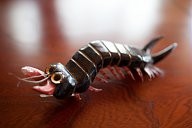
From the old folk belief that centipedes never go back or retreat, using designs of centipedes for armors and equipment was popular.
The Fukushima samurais
Noriko Takasugi / Le Pictorium
LePictorium_0142729.jpg
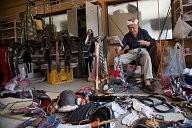
Once all the events are finished, they gather on the following day to put away the equipment and wash the horse tackle.
The Fukushima samurais
Noriko Takasugi / Le Pictorium
LePictorium_0142728.jpg
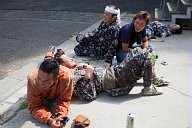
Samurai of Odaka that grew up together like a family from very young age.
The Fukushima samurais
Noriko Takasugi / Le Pictorium
LePictorium_0142727.jpg
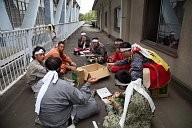
Helping each other, young and old, is one of the characteristics of people living here. Such a good human relationship was common in ancient Japan. Those who are involved in Soma Nomaoi acquire skills to communicate effectively with others in different age groups.
The Fukushima samurais
Noriko Takasugi / Le Pictorium
LePictorium_0142726.jpg
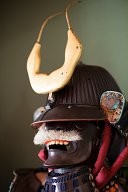
Many people lost their armor and weapons when their houses were washed away by the tsunami.
The Fukushima samurais
Noriko Takasugi / Le Pictorium
LePictorium_0142725.jpg
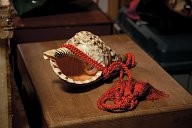
During Soma Nomaoi, Kaiyaku, a person who blows a conch horn, performs a ritual called Reigaini at the beginning of the march and at the presentation to the shrine.
The Fukushima samurais
Noriko Takasugi / Le Pictorium
LePictorium_0142724.jpg
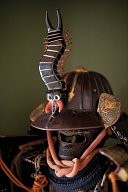
Kat's helmet. From the old folk belief that centipedes never go back or retreat, using designs of centipedes for armors and equipment was popular.
The Fukushima samurais
Noriko Takasugi / Le Pictorium
LePictorium_0142723.jpg
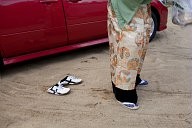
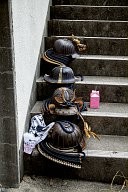
Nomaoi Samurai Warrior changing modern shoes to Japanese sandals.
The Fukushima samurais
Noriko Takasugi / Le Pictorium
LePictorium_0142722.jpg
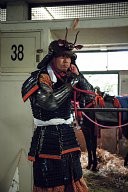
The majority of the kachu worn in the Nomaoi is tosegusoku from Edo Era (1185-). Some of them are made by plate of iron, some are by leather. All included, its approximately12.9kg. If you wear well, nowhere hurts you but if you are not your body will feel pain and feel very heavy.
The Fukushima samurais
Noriko Takasugi / Le Pictorium
LePictorium_0142721.jpg
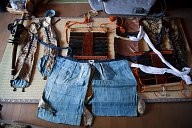
The majority of the kachu worn in the Nomaoi is tosegusoku from Edo Era (1185-). Some of them are made by plate of iron, some are by leather. All included, its approximately12.9kg. If you wear well, nowhere hurts you but if you are not your body will feel pain and feel very heavy.
The Fukushima samurais
Noriko Takasugi / Le Pictorium
LePictorium_0142720.jpg
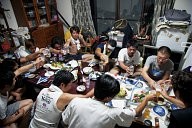
Many people lost their armor and weapons when their houses were washed away by the tsunami.
The Fukushima samurais
Noriko Takasugi / Le Pictorium
LePictorium_0142719.jpg
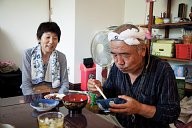
During several weeks prior to Soma Nomaoi and during Soma Nomaoi, samurai gather every night to drink sake and talk stories of their past good or funny job in the event.
The Fukushima samurais
Noriko Takasugi / Le Pictorium
LePictorium_0142718.jpg
oma Nomaoi is an event for men. Only single women below 16 years old may participate. However, those who support men by preparing meals things are women.

The Fukushima samurais
Noriko Takasugi / Le Pictorium
LePictorium_0142717.jpg
Nomakake (Ritual Dedication of Wild Horse), the only religious event retaining the original form, was held at the original location, in the local shrine. Usually samurai chase barebacked horses, which are released at the location about 1 km away from the shrine, into the Shrine. This year, the horses were released at the entrance of the Shrine, shortening the distance. Odaka shrine, Odaka-ku, Minamisoma city

The Fukushima samurais
Noriko Takasugi / Le Pictorium
LePictorium_0142716.jpg
People enjoyed Nomakake (Ritual Dedication of Wild Horse), the only religious event retaining the original form, was held at the original location in the local shrine in 2012.

The Fukushima samurais
Noriko Takasugi / Le Pictorium
LePictorium_0142715.jpg
On the last day of Soma Nomaoi. Samurai drenched with sweat after the finale.

The Fukushima samurais
Noriko Takasugi / Le Pictorium
LePictorium_0142714.jpg
On the second day of Soma Nomaoi in 2012. Shinki-soudatsusen (Sacred Flag Competition), where samurai vie for the God flag, transforming the site into a battlefield, was not held in 2011 because the level of radiation exposure at the field was too high.

The Fukushima samurais
Noriko Takasugi / Le Pictorium
LePictorium_0142713.jpg
On the second day of Soma Nomaoi in 2012. Shinki-soudatsusen (Sacred Flag Competition), where samurai vie for the God flag, transforming the site into a battlefield, was not held in 2011 because the level of radiation exposure at the field was too high.

The Fukushima samurais
Noriko Takasugi / Le Pictorium
LePictorium_0142712.jpg
Even though the size of cavalcade was smaller than usual, Kacchu-keiba (Armed Horse Race) was revived in 2012.

The Fukushima samurais
Noriko Takasugi / Le Pictorium
LePictorium_0142711.jpg
There were many evacuees who returned to their hometown from all over Japan looking forward to seeing the event. The number of this year's visitors was 159,700 for three days, which greatly recovered from last year's 37,400 while the average number of visitors for a normal year is 200,000. Nomaoi is firmly embedded in the culture of the area giving hope to people affected by the disaster.

The Fukushima samurais
Noriko Takasugi / Le Pictorium
LePictorium_0142710.jpg
The second day of Somanomaoi.

The Fukushima samurais
Noriko Takasugi / Le Pictorium
LePictorium_0142709.jpg
The second day of Somanomaoi.

The Fukushima samurais
Noriko Takasugi / Le Pictorium
LePictorium_0142708.jpg
In 2011, 82 samurai managed to join the march even though it was only three months after the disaster. The final number of participating samurai in 2012 was 404, exceeding the original goal of 250, which is half of the usual year's 500.

The Fukushima samurais
Noriko Takasugi / Le Pictorium
LePictorium_0142707.jpg
On the 2nd day of Soma Nomaoi, several friends helping the Nomaoi Samurai warrior to wear warrior for the march and horse racing.

The Fukushima samurais
Noriko Takasugi / Le Pictorium
LePictorium_0142706.jpg
Nomaoi man wearing his Hachimaki headband.

The Fukushima samurais
Noriko Takasugi / Le Pictorium
LePictorium_0142705.jpg
Nomaoi man wearing his Hachimaki headband for the ceremony.

The Fukushima samurais
Noriko Takasugi / Le Pictorium
LePictorium_0142704.jpg
There were many evacuees who returned to their hometown from all over Japan looking forward to seeing the event.

The Fukushima samurais
Noriko Takasugi / Le Pictorium
LePictorium_0142703.jpg
Soma Nomaoi is like New Year's day for them. They appreciate each other and the fact that they were able to hold and participate in their second Soma Nomaoi after the 2011 disaster.

The Fukushima samurais
Noriko Takasugi / Le Pictorium
LePictorium_0142702.jpg
On the first day of Soma Nomaoi, a ceremony was held at some of the Samurai's house to affirm their determination to succeed.

The Samurai of Fukushima
Noriko Takasugi / Le Pictorium
LePictorium_0142701.jpg
The Samurai of Fukushima

The Fukushima samurais
Noriko Takasugi / Le Pictorium
LePictorium_0142700.jpg
In 2011 the conch shell was blown upside down to offer prayers of repose for the departed souls of the victims. This year Soma Nomaoi is almost back to normal. The conch shell was blown wishing for hope.

The Fukushima samurais
Noriko Takasugi / Le Pictorium
LePictorium_0142699.jpg
Succession is recent issue as many of other tradition also has.

The Fukushima samurais
Noriko Takasugi / Le Pictorium
LePictorium_0142698.jpg
The first day of Soma Nomaoi before the march.
samurai 030
samurai 030

The Fukushima samurais
Noriko Takasugi / Le Pictorium
LePictorium_0142697.jpg
Nomaoi man looking at sea in the local beach where the terrific tsunami occurred in 2011.

The Samurai of Fukushima
Noriko Takasugi / Le Pictorium
LePictorium_0142696.jpg
The Samurai of Fukushima

The Fukushima samurais
Noriko Takasugi / Le Pictorium
LePictorium_0142695.jpg
Kaz has been living as evacuee but visits his local friend's horse stable to take care of horses on weekends.

The Fukushima samurais
Noriko Takasugi / Le Pictorium
LePictorium_0142694.jpg
The local shrine adopted many horses that needed to evacuate after the disaster.

The Fukushima samurais
Noriko Takasugi / Le Pictorium
LePictorium_0142693.jpg
Nomai man's kid playing with DS

The Fukushima samurais
Noriko Takasugi / Le Pictorium
LePictorium_0142692.jpg
Children that grew up together with horses like family from very young age. Good relationship with horses is reflected to the effective and gentle way of caring them.

The Fukushima samurais
Noriko Takasugi / Le Pictorium
LePictorium_0142691.jpg
After the early-morning practice of horse racing at the beach.

The Fukushima samurais
Noriko Takasugi / Le Pictorium
LePictorium_0142690.jpg
She wakes up at 4 am every morning to practice horse racing when it becomes two months before Soma Nomaoi in this beach where the terrific tsunami occurred in 2011.

The Fukushima samurais
Noriko Takasugi / Le Pictorium
LePictorium_0142689.jpg
Hiro, one of the Nomaoi Samurai Warriors, adopted many horses that needed to evacuate after the disaster.

The Fukushima samurais
Noriko Takasugi / Le Pictorium
LePictorium_0142688.jpg
Local horseshoe-shaper

The Fukushima samurais
Noriko Takasugi / Le Pictorium
LePictorium_0142687.jpg
The number of horses that were washed away by the tsunami and those were abandoned at homes became inhabitable reached 200.

The Fukushima samurais
Noriko Takasugi / Le Pictorium
LePictorium_0142686.jpg
"Although the level of radiation exposure is pretty high in grounds of the shrine, local people still find a home in this place. I want to stay here and help others to overcome the difficulties," says a senior priest of the local shrine.
-Although the level of radiation exposure is high in grounds of the shrine, local people still find a home in this place. I want to stay here and help others to overcome the difficulties,- says a senior priest the shrine.
-Although the level of radiation exposure is high in grounds of the shrine, local people still find a home in this place. I want to stay here and help others to overcome the difficulties,- says a senior priest the shrine.

The Fukushima samurais
Noriko Takasugi / Le Pictorium
LePictorium_0142685.jpg
Kaz has been living as evacuee but often visits his local friend's stable to take care of horses on weekends

The Fukushima samurais
Noriko Takasugi / Le Pictorium
LePictorium_0142684.jpg
One of the Nomaoi-man keeps all his family armors in his relative's house since his original house is in Odaka-ku.

The Fukushima samurais
Noriko Takasugi / Le Pictorium
LePictorium_0142683.jpg
Nomaoi-man visited his original house in Odaka-ku. "It's not be able to live here any more" he sighed deeply.

The Fukushima samurais
Noriko Takasugi / Le Pictorium
LePictorium_0142682.jpg
The all trash from the decontaminated area are not allowed to be put out.

The Fukushima samurais
Noriko Takasugi / Le Pictorium
LePictorium_0142681.jpg
Nomaoi-man on the lot where his house washed away by the tsunami used to be.

The Fukushima samurais
Noriko Takasugi / Le Pictorium
LePictorium_0142680.jpg
Schools, especially school grounds, were the first places to be decontaminated. Yet my geiger counter measured a radiation level of 0.40 – 1.0 ?Sv/h around the place in 2012 summer.

The Fukushima samurais
Noriko Takasugi / Le Pictorium
LePictorium_0142679.jpg
"Before the birds and foxes would come to eat any animals ran over by cars. Now the dead animals remain untouched for a long time." says a local resident.

The Fukushima samurais
Noriko Takasugi / Le Pictorium
LePictorium_0142678.jpg
Many young people who lost jobs after the disaster now work for local companies that engage disaster waste processing work and decontamination work. The waste in the area which con- taminate radiation can not be easily moved out from the area.

The Fukushima samurais
Noriko Takasugi / Le Pictorium
LePictorium_0142677.jpg
Many young people who lost jobs after the disaster now work for local companies that engage disaster waste processing work and decontamination work. The waste in the area which con- taminate radiation can not be easily moved out from the area.

The Fukushima samurais
Noriko Takasugi / Le Pictorium
LePictorium_0142676.jpg
Fukushima Prefecture, which is well known for its rice production, has the fourth largest rice harvest in Japan.

The Fukushima samurais
Noriko Takasugi / Le Pictorium
LePictorium_0142675.jpg
Decontamination of asphalt requires scratching of the surface resulting in inhalation of particles.

The Fukushima samurais
Noriko Takasugi / Le Pictorium
LePictorium_0142674.jpg
Many young people who lost jobs after the disaster now work for local companies that engage disaster waste processing work and decontamination work. The waste in the area which con- taminate radiation can not be easily moved out from the area.

The Fukushima samurais
Noriko Takasugi / Le Pictorium
LePictorium_0142673.jpg
Fukushima is tranquil country area where no radiation can be seen.

The Fukushima samurais
Noriko Takasugi / Le Pictorium
LePictorium_0142672.jpg
Fukushima is tranquil country area where no radiation can be seen.
Fukushima is tranquil country side where no radiation can be seen.
Fukushima is tranquil country side where no radiation can be seen.

The Fukushima samurais
Noriko Takasugi / Le Pictorium
LePictorium_0142671.jpg
Fukushima is tranquil country area where no radiation can be seen.
Next page